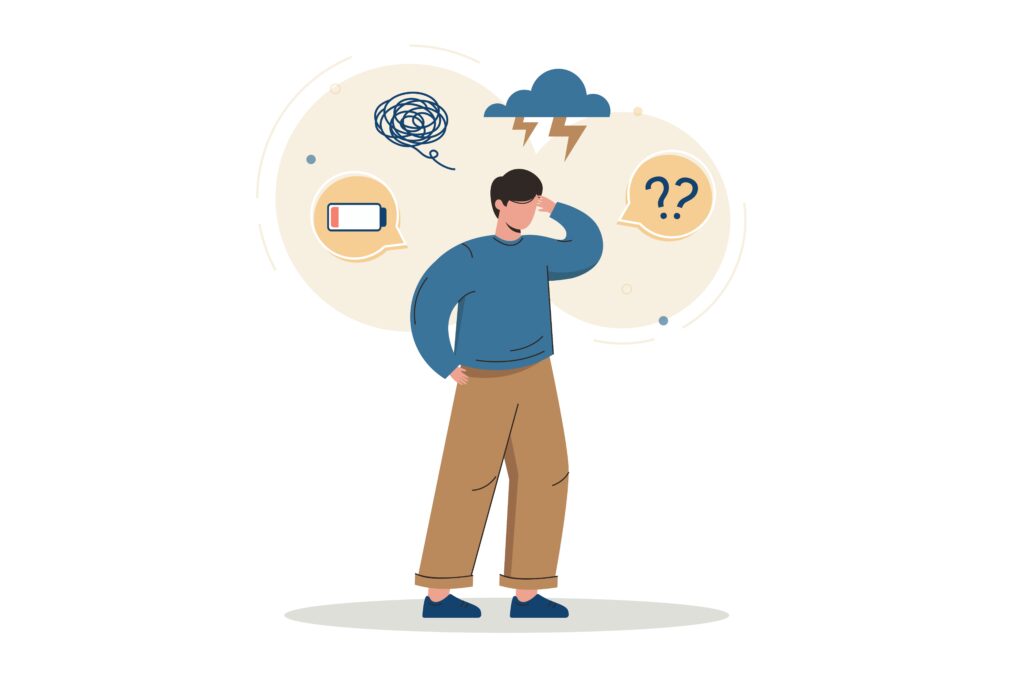
You know something’s off. You’ve known for weeks, maybe months. The stress isn’t letting up, sleep feels like a luxury, and you can’t remember the last time you felt actually good. But when someone asks how you’re doing, you say “fine” without thinking.
Later, you might wonder why you didn’t just say something. It’s not like you don’t trust the person. It’s not even that you don’t want help. But the words don’t come. Or they feel too heavy. Or it just seems easier to keep moving forward and deal with it yourself.
If that sounds familiar, you’re not alone. The majority of men struggling with mental health issues don’t talk about them. Not to friends, not to family, often not even to doctors. And it’s not because they’re unaware or don’t care. The reasons run deeper than that.

The Numbers Tell Part of the Story
Men are significantly less likely than women to seek mental health support. They’re also less likely to be diagnosed with depression or anxiety, even though suicide rates among men are three to four times higher in most countries.
That gap says something important: it’s not that men don’t experience mental health struggles. It’s that they’re less likely to identify them, talk about them, or get help for them until things reach a breaking point.
The silence has real consequences. Untreated depression, unmanaged anxiety, chronic stress—they don’t just go away on their own. They compound. They affect your physical health, your relationships, your work, your sense of who you are.
Why Talking Feels Impossible
You learned early that emotions are private
Most men grow up with subtle (and sometimes not-so-subtle) messages about how they’re supposed to handle feelings. “Toughen up.” “Don’t be dramatic.” “Man up.” Even if your family was supportive, the broader culture reinforced these ideas through friends, coaches, movies, everywhere.
By the time you’re an adult, it’s not a conscious rule anymore. It’s just wired in. Struggling feels like failing. Admitting you’re not okay feels like admitting weakness.
There’s no clear language for it
Women often grow up with more practice talking about emotions—naming them, sharing them, processing them with others. A lot of men don’t. So when you’re dealing with something internally, you might not even have the vocabulary to describe it accurately.
What does depression feel like if it’s not sadness? How do you explain anxiety when it shows up as irritability or restlessness instead of panic? Without the language, it’s hard to communicate what’s happening, even to yourself.
Mental health feels abstract
A broken arm is obvious. Chest pain gets attention. But mental health issues are invisible. There’s no scan, no clear diagnosis you can point to. So it’s easy to minimize what you’re experiencing or question whether it’s even real.
You might tell yourself you’re just tired, just stressed, just having a rough patch. And maybe that’s true sometimes. But when “just tired” lasts for months, it’s something more.
You’re supposed to solve problems, not have them
Many men are raised to see themselves as problem-solvers, providers, the people others rely on. When you’re the one who needs help, it can feel like you’re not living up to that role.
Asking for support—especially emotional support—can feel like admitting you can’t handle your own life. Which feels like letting people down.
You don’t want to burden anyone
Even if you know logically that people care about you, there’s often a voice saying, “They have their own problems. Why add yours to the pile?” Or you worry that opening up will change how people see you—that you’ll become “the guy with issues” instead of just yourself.
So you keep it contained. You manage it alone. You tell yourself it’s considerate.
There’s fear of judgment
What if people think you’re overreacting? What if they don’t take it seriously? What if they see you differently afterward—as weaker, less capable, less reliable?
These aren’t irrational fears. Some people do react poorly. Some do minimize or dismiss men’s mental health struggles. That risk makes silence feel safer.
Vulnerability feels dangerous
Opening up means losing control of how you’re perceived. It means exposing parts of yourself that feel raw or uncertain. For a lot of men, that level of vulnerability doesn’t come naturally. It feels risky, uncomfortable, almost physically painful.
It’s easier to stay guarded.
What Silence Actually Costs
When you don’t talk about what’s going on, it doesn’t disappear. It just stays with you, taking up space in your head and affecting everything else.
Your relationships suffer. When you’re struggling internally but not communicating it, people around you notice something’s off—they just don’t know what. You might seem distant, irritable, checked out. Partners and friends can feel shut out, which creates tension and misunderstanding.
Your physical health takes a hit. Chronic stress, untreated depression, and suppressed emotions all have physical effects. High blood pressure, weakened immune system, digestive problems, chronic pain. Your body keeps the score even when you’re not talking about it.
Work becomes harder. Mental health struggles affect focus, decision-making, energy, and motivation. You might push through for a while, but burnout is real. Performance drops. Mistakes happen. The pressure builds.
Things escalate. Small issues that could’ve been addressed early become bigger problems. Mild depression deepens. Manageable anxiety turns into panic attacks. Stress compounds into full breakdown. The longer you wait, the harder it gets to turn around.
You lose connection with yourself. When you’re constantly suppressing or ignoring what you’re feeling, you become disconnected from your own internal state. You stop knowing what you actually need, what matters to you, what would genuinely help.
What Makes It Easier to Open Up
You don’t need to completely transform how you communicate overnight. Small shifts can make a real difference.
Start with one person
You don’t have to announce your struggles to everyone. Pick one person you trust—a close friend, a partner, a sibling, even a coworker you’re comfortable with. Just test the waters. “I’ve been dealing with some stress lately” is enough to start.
Frame it as practical, not emotional
If talking about feelings feels too vulnerable, approach it from a practical angle. “I haven’t been sleeping well and it’s affecting my work. I’m trying to figure out what to do about it.” You’re still opening the door, just in a way that might feel more manageable.
Recognize it’s not complaining
There’s a difference between venting endlessly and acknowledging something real that’s affecting you. You’re not whining. You’re being honest about your reality. That’s not weakness—it’s self-awareness.
Text first if that’s easier
If face-to-face feels too intense, start with a text or message. Sometimes it’s easier to type something out than to say it out loud. The barrier is lower. You can take your time finding the words.
Connect it to something external
Sometimes it’s easier to talk about mental health in the context of something else. “This situation at work has been getting to me more than I expected.” “I’ve been thinking about seeing someone about stress management.” It gives the conversation structure.
Remember people usually want to help
Most people, when someone they care about opens up, don’t judge or dismiss. They appreciate the trust. They want to support you. The negative reactions you’re imagining are often worse than what actually happens.
Normalize it for yourself first
Before you can talk to others, you need to accept that what you’re experiencing is valid. It’s not dramatic. It’s not weakness. It’s part of being human. Mental health struggles are common, treatable, and nothing to be ashamed of.
What Doesn’t Actually Help
Forcing yourself to “just talk” – If you’re not ready, pressure doesn’t help. You can acknowledge that you’re struggling without immediately laying everything out. It’s okay to take small steps.
Comparing your struggles to others – “Other people have it worse” doesn’t make your experience less real or less worthy of attention. Pain isn’t a competition.
Waiting until you hit rock bottom – You don’t need to be in crisis to reach out. Early intervention is always better. If something’s affecting your daily life, that’s enough reason to address it.
Talking to people who’ve proven they won’t get it – Not everyone is equipped to handle these conversations well. It’s okay to be selective about who you open up to.
When Professional Help Makes Sense
Talking to friends and family helps, but sometimes you need someone trained to deal with mental health specifically. A therapist or counselor isn’t there to judge you. They’re there to help you understand what’s happening and give you tools to manage it.
Therapy isn’t just for severe mental illness. It’s for anyone dealing with stress, life transitions, relationship issues, burnout, grief, anxiety, depression—anything that’s making life harder than it needs to be.
You wouldn’t try to fix a broken bone yourself. Mental health works the same way. Sometimes you need expertise.
If you’re not sure where to start, talk to your doctor. Look into employee assistance programs if your job offers them. Many therapists offer virtual sessions now, which removes some barriers. And if the first therapist doesn’t feel like a good fit, that’s normal—try someone else.
The Bigger Picture
The culture around men and mental health is slowly shifting. More men are talking openly about their struggles. Athletes, actors, public figures—people who fit traditional masculine ideals—are being honest about therapy, depression, anxiety, burnout.
That matters because it normalizes something that’s been stigmatized for too long. It shows that struggling doesn’t make you less of a man. It makes you human.
But cultural change happens slowly. In the meantime, you have to make the choice for yourself. You can wait for the world to fully change, or you can start breaking the silence in your own life.
It doesn’t have to be dramatic. You don’t need a big announcement or a breakdown. Just start being a little more honest about what’s actually going on. With one person. In one conversation.
That’s how it begins.
FAQ
How do I know if I actually need to talk to someone about my mental health?
If what you’re experiencing is affecting your daily life—your sleep, work, relationships, physical health, or ability to enjoy things—that’s a sign. If you’ve been feeling off for more than a couple weeks, that’s another. You don’t need to hit a crisis point to reach out.
What if I don’t know how to explain what I’m feeling?
That’s common. Start with what you do know: “I’ve been feeling really drained,” “I can’t focus like I used to,” “Everything feels harder lately.” You don’t need perfect language. A good therapist or even a supportive friend will help you work through it.
Is therapy really worth it for men?
Yes. Research consistently shows that therapy works for men just as well as it does for women. The key is finding someone you feel comfortable with and being willing to engage honestly. Different approaches work for different people—some men prefer structured, goal-focused therapy while others benefit from more open-ended conversations.
What if people think less of me for admitting I’m struggling?
Some people might not understand, but those aren’t the people whose opinions matter. The people who care about you will respect your honesty. And increasingly, vulnerability is seen as a strength, not a weakness.
Can I just handle this on my own?
You might be able to, depending on what you’re dealing with. But “on your own” doesn’t have to mean in complete isolation. You can still read, learn strategies, make changes—and also talk to someone when you need to. Independence doesn’t mean refusing all support.
How do I bring this up with my doctor without it feeling awkward?
Doctors ask about mental health regularly now. You can say something like, “I’ve been dealing with a lot of stress and I think it’s affecting my health” or “I haven’t felt like myself lately and I wanted to talk about it.” They’ve heard it before. It’s part of their job.